
Most electric vehicle charging stations still make decisions the same way a simple timer does: charge when plugged in, stop when full. That works for a single driveway charger. It breaks down fast across a real network — six stations sharing one grid connection, drivers arriving unpredictably, and a utility tariff that punishes everyone for charging at the same time. Making that work reliably is what a lot of my research over the past two years has focused on, using OCPP-integrated AI rather than static rules.
Why OCPP integration matters
The Open Charge Point Protocol (OCPP) is what most commercial EV chargers already speak to communicate with a central management system — session start/stop, meter values, connector status. The useful part for research is that it gives you a live, structured data stream from real hardware instead of a simulation.
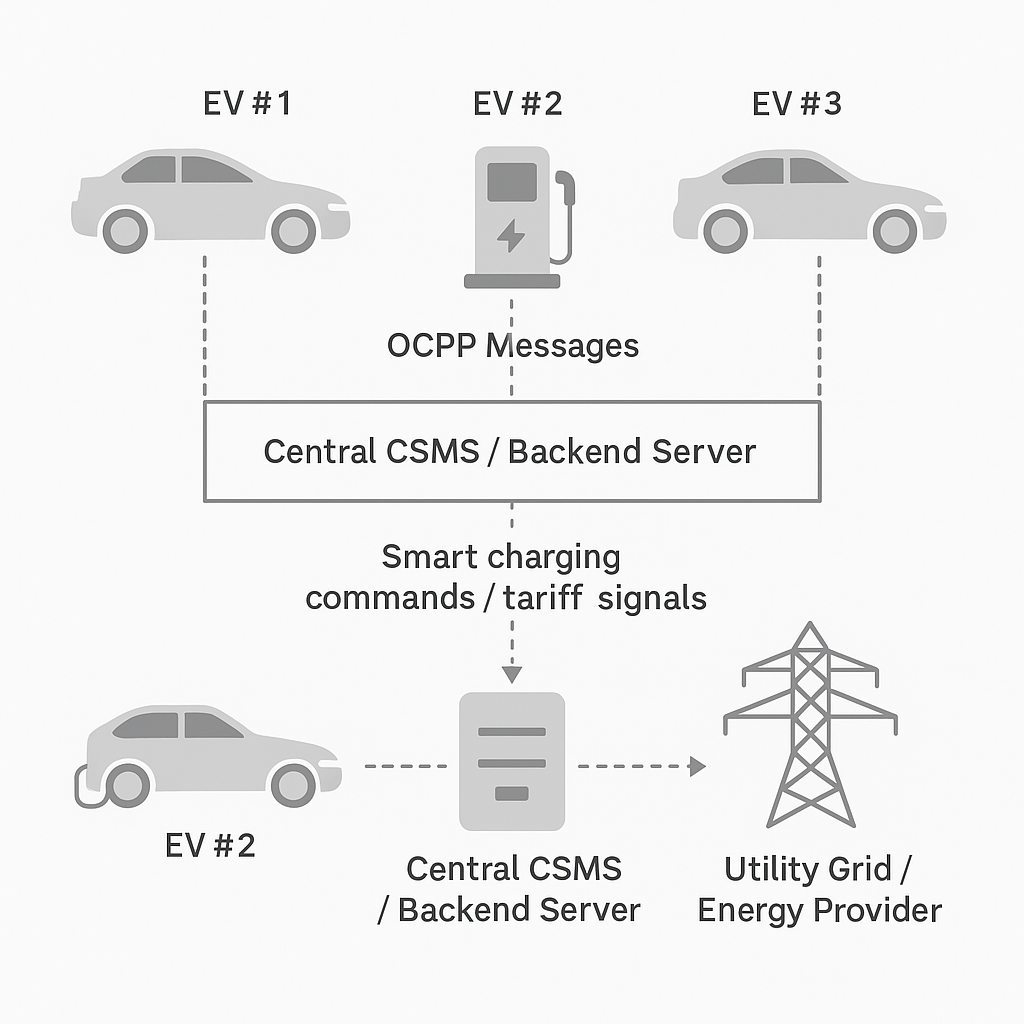
Every model I’ve built for charging scheduling, forecasting, or anomaly detection has been trained and evaluated against real OCPP data, not synthetic traces — which matters, because synthetic data tends to make every method look better than it actually is in the field.
Reinforcement learning for charging scheduling
Scheduling which vehicle charges when, and how fast, is a sequential decision problem — exactly the kind reinforcement learning is built for. I’ve used PPO and Q-Learning to let a scheduler learn charging policies directly from station-level data, optimizing for cost and grid stability rather than following a fixed priority list. The safety constraint matters as much as the optimization: a policy that saves money but occasionally overloads a connection isn’t deployable. Safe and Tariff-Aware Reinforcement Learning for EV Charging Using Real OCPP Data covers the constrained version of this in more detail.
Tariff-aware scheduling and load forecasting
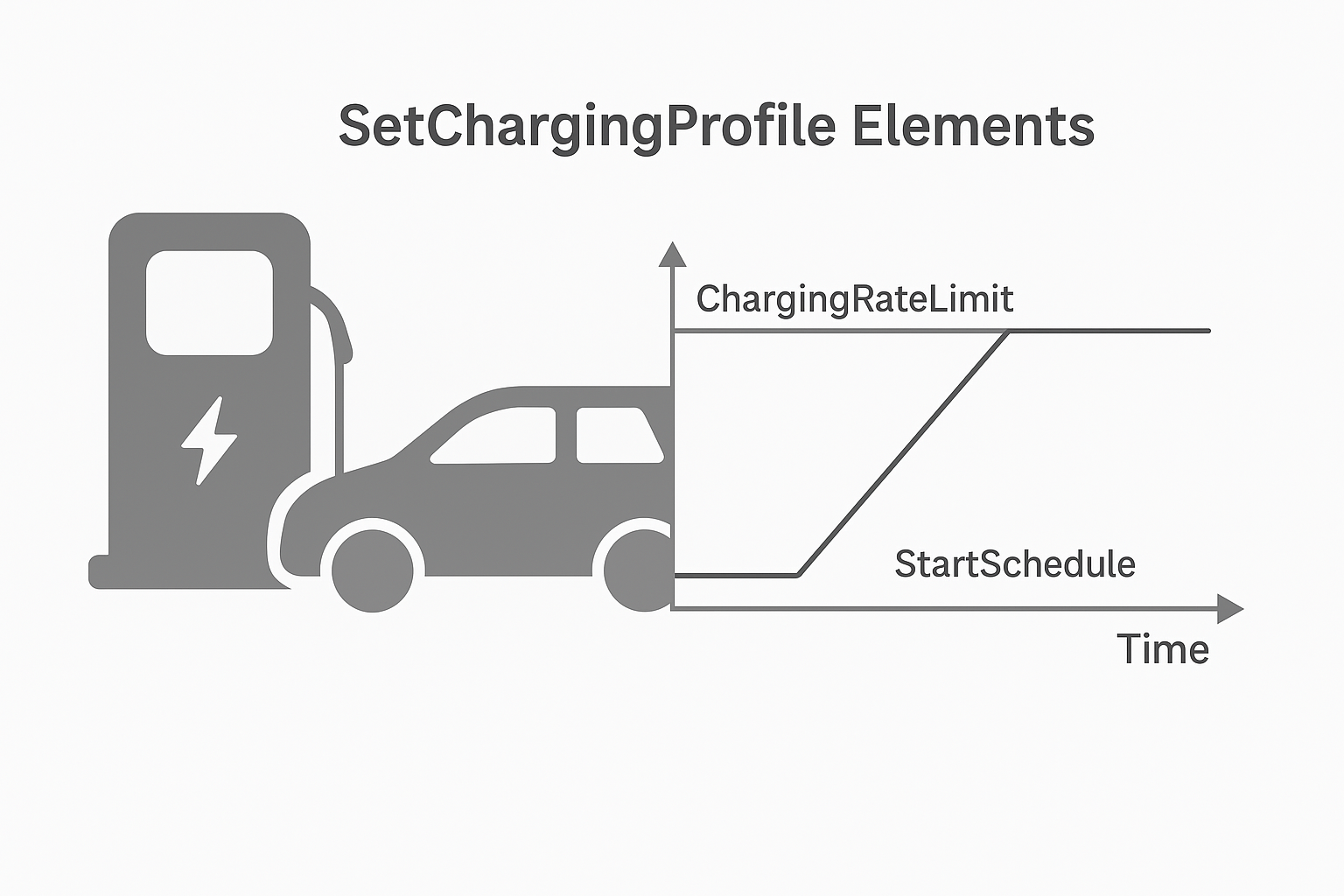
Electricity tariffs aren’t flat, and a scheduler that ignores that is leaving money on the table — or worse, pushing cost onto the grid at exactly the wrong hour. Tariff-aware scheduling shifts flexible charging load toward cheaper, lower-demand periods automatically, using OCPP’s own SetChargingProfile message to actually enforce the schedule on the charger:
That only works if you can forecast demand first: I’ve used LSTM, GRU, XGBoost, and Prophet models side by side for charging-demand prediction, since no single method wins across every station’s usage pattern.
Coordinating multiple stations, not just one
A single smart charger is a solved problem. A network of them sharing a grid constraint is not — six stations under an 80 kW limit means the system has to negotiate, not just optimize locally. That’s the real bottleneck in most “smart charging” products today: they’re smart at the connector, not across the network. Real-World Tariff-Aware Safe Reinforcement Learning for Grid-Stable OCPP EV Charging Networks is the multi-station version of this work.
Catching problems before drivers do
Charging networks fail in boring, expensive ways — a connector that silently stops delivering full power, a session that hangs without erroring out, a station reporting meter values that don’t add up. An anomaly-aware Q-learning framework can flag these in real time across a multi-station network before they turn into a support ticket or a stranded driver. See An Anomaly-Aware, Q-Learning Framework for Real-Time Scheduling in Multi-Station EV Charging Networks.
What this adds up to
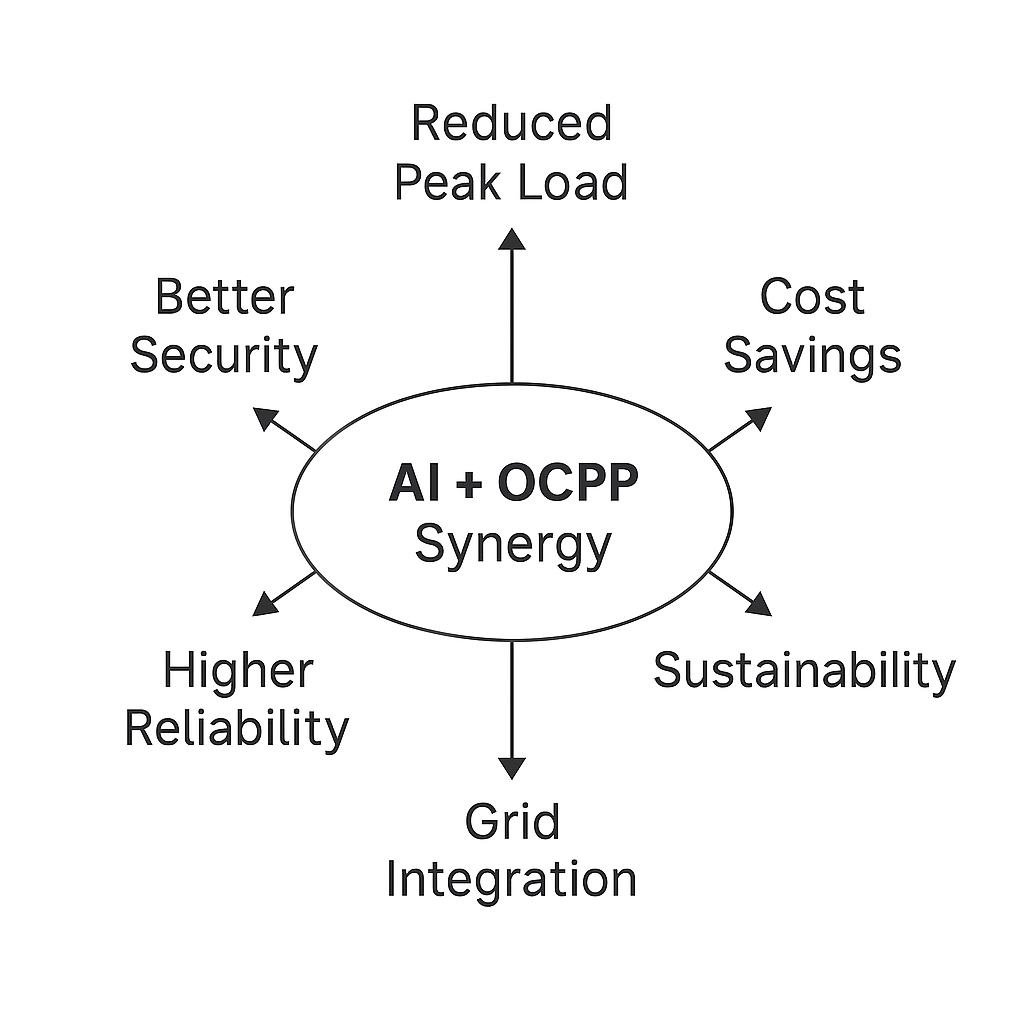
Across these projects, the consistent result has been 25–40% peak-load reduction and roughly 30% energy-cost savings, measured against real Malaysian charging datasets rather than simulation. That gap between “works in simulation” and “works on real OCPP data” is where most of the actual research effort goes.
The full technical write-ups are in my publications, and I’m always open to hearing from anyone working on similar problems — get in touch.